Where in the World is Carmen Sandiego?…Probably at King and Shaw

One of the advantages of having younger siblings is the ability to watch some of the television shows that you might not normally watch without getting beat up by your friends. Where in the world is Carmen Sandiego? is an example of one of these shows.  Carmen was a master villain  who directed her minions to steal world landmarks.  She dressed in a trench coat and a wide brimmed hat to disguise herself.  In the end, the villain would get caught by the astute contestants but Carmen would escape much to the dismay of the chief who was played by the late Lynne Thigpen.  Even though I was an older teenager, I did learn a lot from that show.  For example, it taught me that the Washington monument looked like a dildo and that Louvres is the one with the pyramid  in the courtyard.  In fact, I may have gotten an ‘A’ in geography because of that shifty laddie.

I have been keen to try Carmen since it replaced the space along Queen street that Caju used to occupy.  Following  the blueprint of Cava and Patria, it focuses on Spanish inspired tapas except in this case adds a few twists and turns here and there. We arrived at around seven to a quarter-full restaurant so getting a seat didn’t seem a problem.  By 730, however, the place was full so I considered us afortunado that we got a seat.

Carmen has an impressive cocktail menu with a focus mainly on bourbon and tequila.  I started with the Almodovar  ($14) which was Bourbon, triple sec, lime, mint and  olive oil.  It was nice summer cocktail with fresh flavours which matched the acid and fattiness in some of the early dishes. Loved the olive oil.

Matador $14
Almodovar $14


There were a small group of us, so we ordered a docena of dishes to try the array of flavours that Carmen offered.

1. Pulpo Vinagretta ($8)

A cross between ceviche and an antipasto .The acid is sherry vinegar instead of lime and plenty of olive oil is used. Served with fresh bread, it was a delicious start to the meal.
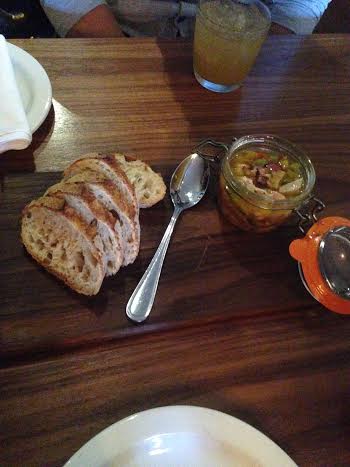
Pulpo (Octopus)
Pulpo (Octopus) Vinagretta $8

2. Jicama con Aguacate  ($8)

More Mexican than Spanish, these little morsels were a tasty bite of fresh flavours. I have a jicama fetish so I thought they were just delicious.

Jicama
Jicama con Aguacate $7

3. Marinated Olives ($4)

I’m not an olive fan but based on the feedback from the table and the visibly appealing  presentation of different sizes and colours of this popular fruit, I’d say it was a good spent for four bucks.

Olives
Marinated Olives $4

4. Ribeye Pintxos ($14)

A delicious take on these Spanish snacks.  The amount of beef was a little stingy but attractive and well prepared.

Ribeye Pintoxes
Ribeye Pintxos $14

5. Carne Tartara ($12)

Hardly a traditional Spanish dish, beef tartare is a Toronto restaurant staple.  This one compares well to the others in the area.  Pickled ramps and cucumber accessorize the beef along an in-shell quail egg sitting atop it.

Tartar
Carne Tartara $12

6. Patatas Bravas ($7)

These were a true representation of one of Spain’s most recognized dishes.  Slightly sweet and spicy sauce was slathered atop a generous plate of crispy potatoes and finished with streams of aioli.  Very enjoyable.

Patatas Bravas
Patatas Bravas $7

7.  Crispy bread, fresh tomato spread and manchego cheese ($6)

Nicely presented, fresh, simple and authentic, this dish was a pleasant facsimile of the homeland favorite.

Crispy Bread with Tomato and Manchego Cheese
Crispy Bread, Fresh Tomato and Manchego Cheese $6

8. Pork Tenderloin

A piquant sauce beneath slices of nicely cooked pork tenderloin and topped with manchego cheese, this dish was simple but delicious.

Pork Tenderloin
Pork Tenderloin $10

9. Blood Sausage

Probably the funkiest dish on the menu, I enjoyed the nicely seasoned sausage covered in melted cheese.  Surprisingly, blood sausage is quite a universal dish but I think very few of those cultures top it with cheese like you would escargot or nachos.

Blood Sausage
Blood Sausage $13

10. Quail

The versatile (and foodie friendly) bird was served with flavours including olive and almond. It was a well executed dish.

Quail
Quail $12

11.  Galletas ($2.50 each) and Helado ($6)

I suppose you could call this the Spanish version of cookies and ice cream.  Normally served  separately, we decided on these as small and sweet ways to end the meal.   No complaints.  The cookies were moist and flavourful and not over sweet despite the use of dulce de leche and the rhubarb ice cream was a tart but enjoyable finish to the evening.

Galletas $2.50 each
Galletas $2.50 each
Carmen Ice Cream
Helado $6

My Take

Carmen opened in the midst of the Spanish invasion and before the explosion of the small plate phenomenon in Toronto. It sticks to both the blueprint of traditional tapas with dishes like Patatas Bravas and Ribeye Pintxos but also offers  “vanguardia” dishes with fusion concepts including Mexico and the Middle East.   All in all, the food was above average.  The vibe was a little quieter than some of the other eateries in the area which made for an enjoyable night of discussion instead of trying to speak over the bellowing voices of the in-house music. I didn’t see Vic the Slick , Patty Larceny or any of the other minions associated with the show attempting to steal silverware or the large painting of a woman (who I presume might be Carmen) off the wall. However, I thought I might have seen Carmen Sandiego herself lurking around the shadows of restaurant…but then again, maybe it was just Joanne Kates.

 

Carmen on Urbanspoon


Review:Toronto:Queen West:Caju

Caju was brought to my attention when it hosted a locally organized fundraiser to raise money to build soccer pitches in Brazil. Please see http://www.facebook.com/justforkicksto for more information. I met the chef and owner, Mario, who invited me to come back and experience Brazilian food. Without hesitation, I took him up on the offer.

A couple of weeks later I made a reservation and was treated to a great lesson.  Like many countries with large geographies, the cuisine is regional, mainly dictated by the availability of local ingredients.   Historically and not surprisingly, it is heavily influenced by Portugal (Caju is also the Portuguese name for the fruit of the cashew tree which sprouts the popular nut). Interestingly, Brazilian cuisine is also influenced by immigrants from Asia, Africa and the Middle East.

Must

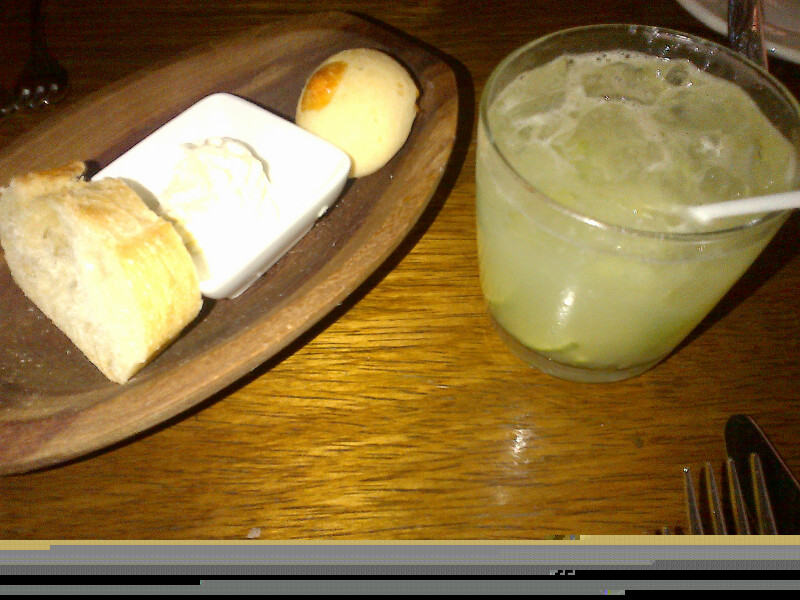
The caipirinha is Brazil’s national cocktail.  Caju does not disappoint. Made with sugar cane rum, sugar and lime, this cocktail is quite refreshing and rivals many others served on the strip, without the need to add cucumber or Pimm’s.  The price point is also reasonable with a number of variations on the caipirinha available for $8.  By the way, the Brazilian cheese buns are great too.

Caipirinha and great cheese buns

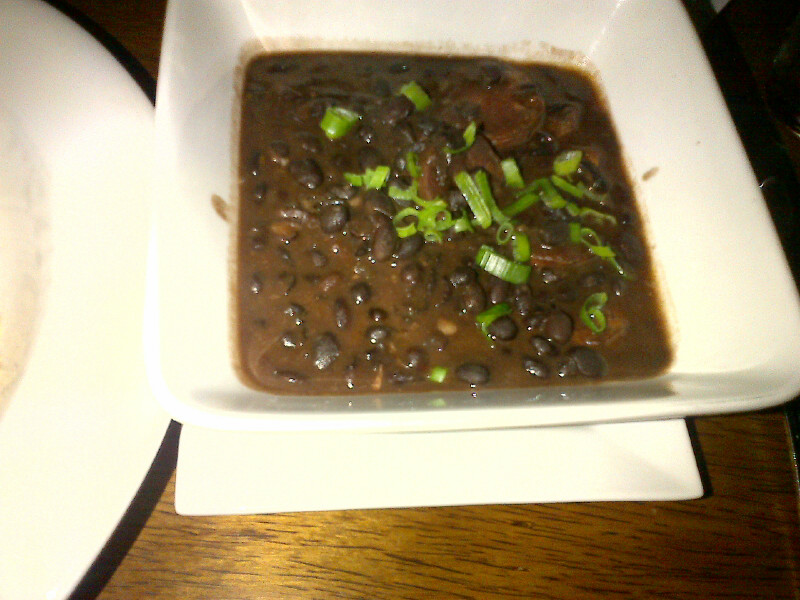
The feijoada (a bean based pork and sausage stew with spices and aromatics) had a basewith a deep, complex flavor reflective of the slow cooking process.  The stewed pork was tender and coupled with the  well seasoned sausage provided both  taste and textural differences.

Feijoada

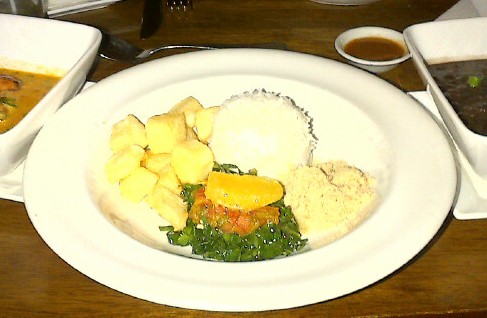
The feijoada was served with traditional accompaniments including cassava (both fried and milled), collard greens and rice, resulting  in a variety of different flavors with each forkful.

Feijoada Accompaniments

The gnocchi meshes the  traditional flavours of tomato and olive oil with a brazilian spin of  cassava flour and heart of palm to create a vegetarian, gluten-free option competitive with others available in the area.

Gnocchi- Gluten Free and Vegetarian!

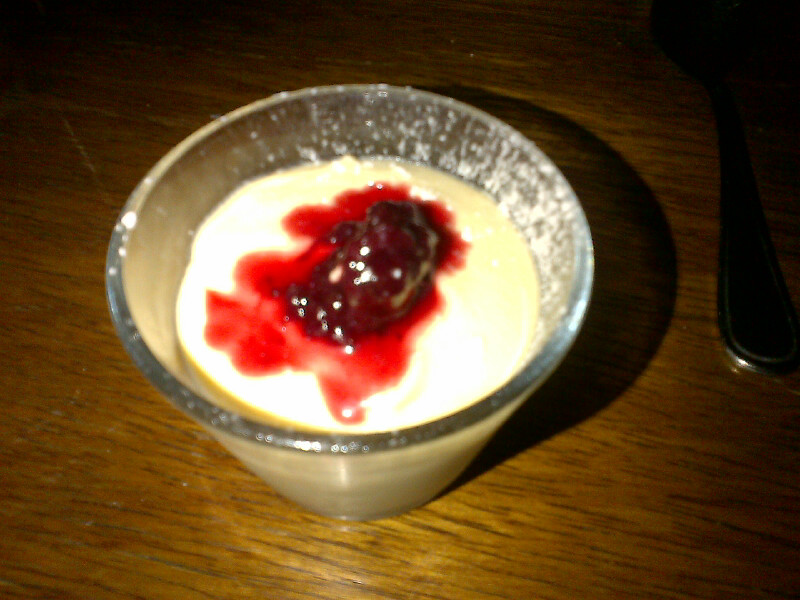
The passion fruit mousse was a perfect finish to the meal. The tartness of the fruit was not drowned out  by sugar, resulting in a fresh flavour with a palate cleansing effect.

Maybe

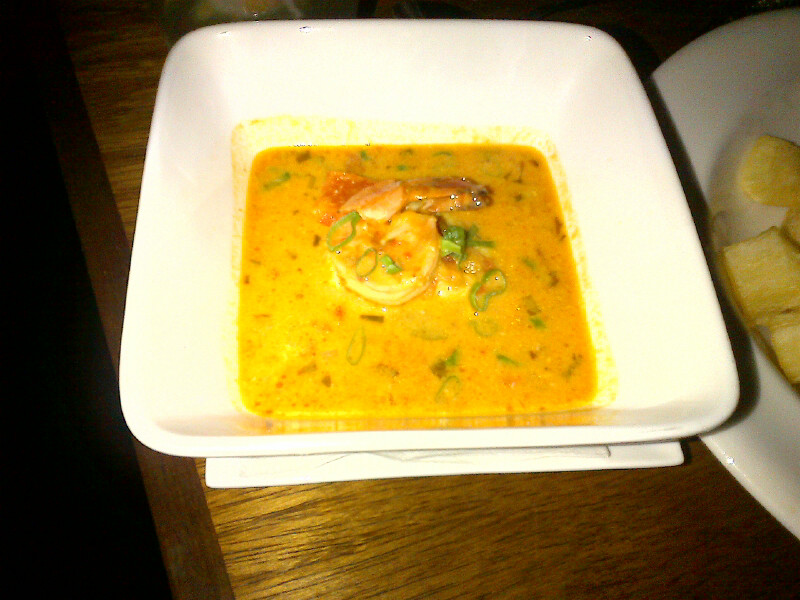
The moqueca (an African influenced seafood soup with a foundation of coconut milk and fish stock and seasoned with onion and cilantro) had an intense flavour reminiscent of  a Thai tom yum or Singapore laksa soup.   It was spiced perfectly although I wished it was served a little hotter. It was quite salty but not unbearably so. I would have  loved  if they served it with a boiled egg…then again, I would add an egg to any dish any time.

Moqueca- Seafood Soup

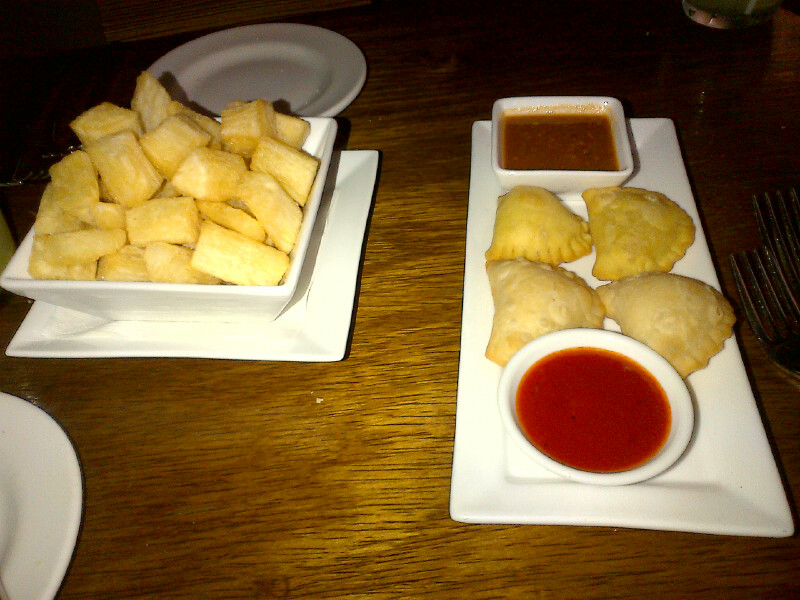
The pasteis are similar to empanadas and are stuffed with heart of palm or cheese. The former  were full of filling and flavor, the latter not so much so.   The accompanying hot sauces were full of punchy flavor which complimented the more subtle flavour of the two-bite appetizers.

Fried Cassava and Pasteis with Really good hot sauce

Mundane

Sandwiched in between the established Queen West and the emerging Ossington area and rather discreet, Caju is a bit of a black sheep along this strip.  It just may be that traditional flavours and decor  have  fallen  a bit out of fashion, especially in this volatile neighborhood.   This is not a complaint, per se, but some passerbys will look in the window and carry on  in search of  blackboard menus and tattooed service.

My Take

Caju offers traditional Brazilian fare in a traditional setting (the floors are made of Brazilian Cherry wood).  This is in stark contrast to the much talked about eateries (eg. ursa and county general) on the same block which boast eclectic   environments and tailor their menus to current  food trends.  I would argue that many of Caju’s dishes would easily fit in most menus along the Queen street corridor or other hot restaurants in the area. The moqueca, for example, is hands down better than hawkerbar’s signature laksa. Fried cassava with that hot sauce could easily pass on La Carnita’s menu. I admire Mario’s commitment to tradition and at the same time I’m left  yearning for more.  He spoke of the traditional  use of pig trimmings (ear, tail, feet) and different varieties  of sausage that could be used in the frijoada which I think would appeal to the same people who wait two hours to down a pig tail taco at Grand Electric or subscribe to the trendy nose to tail philosophy.  After dining at Caju, I easily see why they have an impressive Zagat rating of 26 for food and 24 for service.  Despite being neat and inviting, I also see why they have a more mediocre  21 (even though still considered very good) in decor since it seems a little out of place in this neighbourhood filled with chaos and pretension. Perhaps serving dishes in  the traditional clay pots or incorporating more “Brazil” into the environment would appease those who were  more disappointed with the decor than they were with the food.

In the end, I believe good food and good service do not go out of style.  I enjoy getting bread and very tasty cheese buns before my meal, being  served by friendly staff wearing traditional white and black uniforms (as opposed to black tees with head-scratching  pictures or witty sayings)  and eating  fusion cuisine defined  through years of tradition and not what the current trendsetters and saloon owners are saying about collard greens and sweetbreads.  Traditional Brazilian food in a traditional environment  is Caju…or cashew, in a nutshell.

Cajú on Urbanspoon